
1. What Makes a Sigil?
Learning objective
Recognize a sigil as a symbol used in an intentional practice, and distinguish that use from decoration alone.
A mark and an act
A striking shape can be decoration, a logo, or a personal drawing. You cannot tell from its appearance alone whether it is a sigil. In the modern practices considered here, a sigil is a symbol made or chosen for an intention and used in an act meant to bring about change. The mark and what you do with it belong together. It does not have to look mysterious or be difficult to draw.
A common sequence is to name an intention, form a symbol, activate it, release it, and live with what follows. Traditions and practitioners differ: some keep a mark visible, some put it away, and some work in other ways. This sequence is a useful entry point, not a universal rule.
The word activation or charging names a deliberate transition from preparing the symbol to using it. In some practices the culminating act is to tear or burn the sigil; in others it is retained and encountered again. Release can mean ending anxious handling of the working; it does not require literal forgetting or abandoning practical action.
Example: beginning creative work
Ari wants to return to drawing after work. A spiral on a notebook is simply a design until Ari gives it a purpose and uses it in a deliberate practice. Ari chooses the intention “I begin my creative practice,” makes a personal symbol, and later uses it to mark the beginning of a drawing session. The same-looking spiral could have a different role for someone else.
Another possible mark: a pause before drawing
Consider a separate illustrative intention: “I pause before I begin drawing.” Its maker chooses a horizontal line for a threshold, an arch for a breath, and a dot for this moment. These are the maker's meanings, not a prescribed formula. The gallery below offers other possible finished forms; their appearance alone does not tell us how they were made or used.

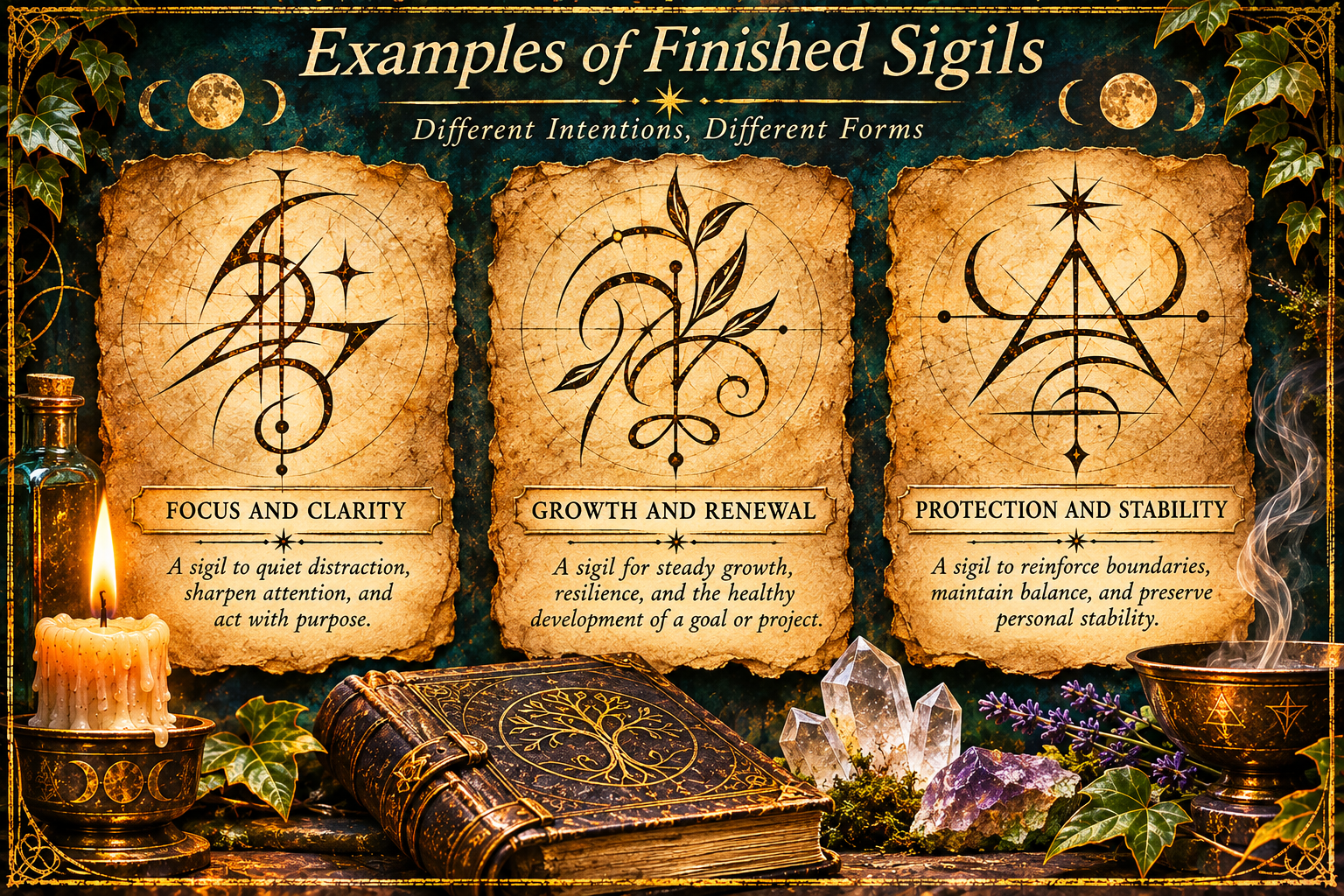
The maker could activate the finished sigil with quiet attention, retain it beside a drawing pad, and pause when encountering it. Another person might use or interpret the same ingredients differently.
Activity: distinguish the role
- Imagine an abstract shape on a poster, made only because its maker liked the design. What is its role?
- Imagine a similar shape made for a chosen intention, then used deliberately in a personal working. What changed?
- Write one sentence in your own words about how intention, symbol, and act relate. You need not share your answer.
The first shape is decoration in this example; the second takes part in a sigil practice. Its appearance alone did not decide the difference.
Recap
A sigil is an operative symbol in a practice, not a visual style. Its maker's intention and use matter, and methods vary. Next, you will find an intention and give it a form.